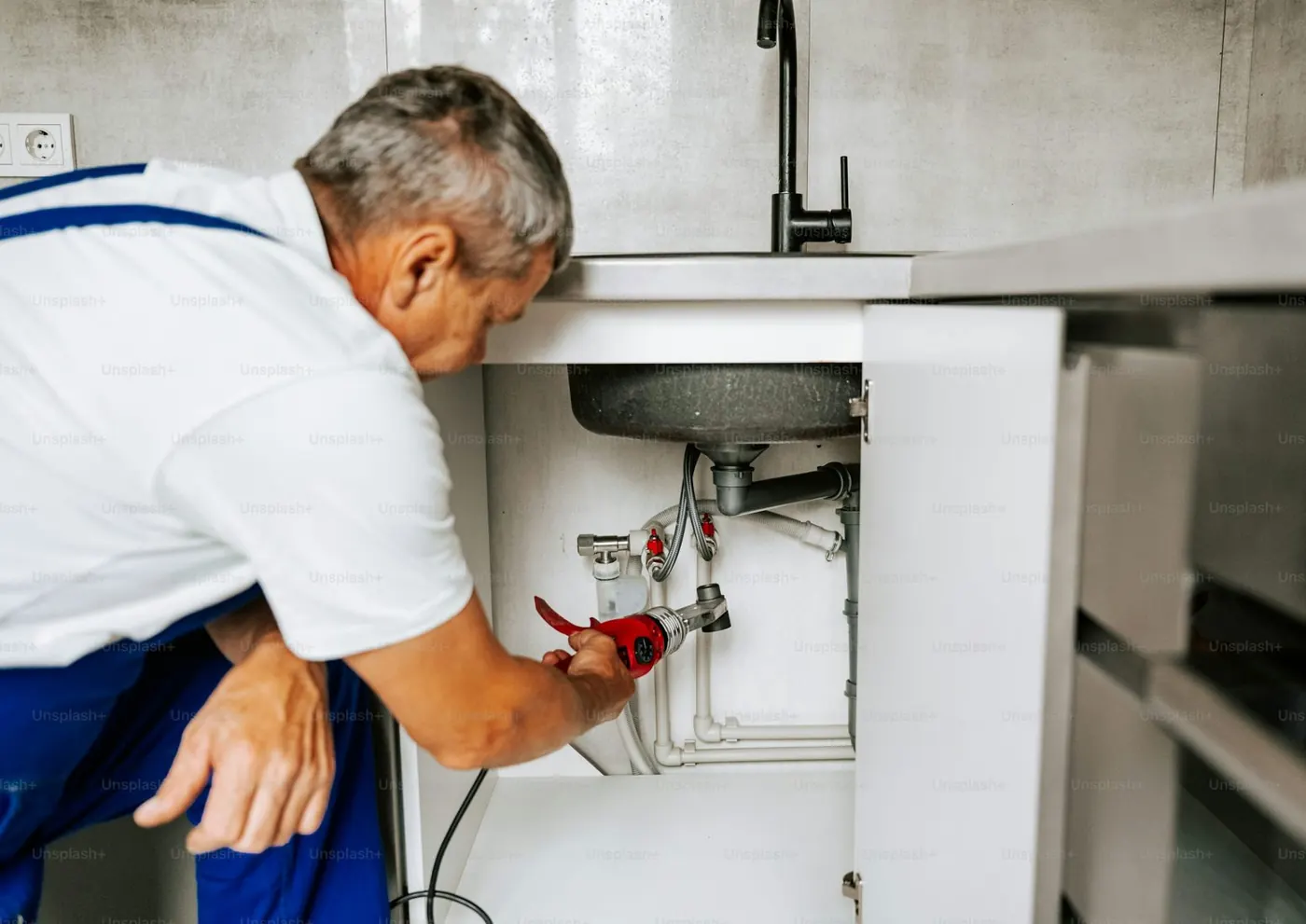
Shut off the water only when it is safe
If the leak is continuous or spraying, close an accessible local shutoff valve. Do not force a seized valve. If it does not stop the flow or cannot be reached safely, use the main shutoff only when you can get to it without crossing an electrical or flooding hazard; contact a plumber or water operator when needed.
Place a container under the trap, dry the cabinet and remove standing water. If there is an outlet, power strip, dishwasher or other electrical appliance nearby, do not touch wet parts. Turn off power at the panel only if reaching it is completely safe.
When does the water appear?
Drips that appear mainly when the sink runs can point toward the trap or drain connection. A leak that continues while the sink is unused may be on the pressurized supply side. This is a clue, not a final diagnosis.
Dry the visible joints and place a dry tissue around them. Observe only briefly and in a controlled way when there is no electrical risk. Water can travel along a cabinet and appear away from its source.
What can you check on a visible trap?
With an accessible plastic trap, you may check whether a nut or visible slip-joint washer has moved. Keep a bucket underneath, do not dismantle a pressurized connection and do not overtighten: plastic threads and fittings can be damaged.
After a careful check, run a small amount of water and inspect every joint. A crack, corrosion, damaged thread, wall connection or recurring leak is not solved by tightening; it needs an inspection and the correct part or repair.
When to call a plumber immediately
A photo and a short note about when the leak appears can help a plumber prepare for the conversation. A photo is not enough for a final diagnosis.
- the leak will not stop or is spraying under pressure;
- the local valve does not close, is seized or the main shutoff is unknown;
- water is coming from a wall, floor, cabinet or concealed route;
- there is corrosion, a crack, damage to another property or a recurring leak;
- water has reached an outlet, cable, panel or electrical appliance.
Short answers
What should I do first if I find water under the sink?
Limit the water if the valve is accessible and safe, place a container underneath, dry the area and keep away from electrical parts. Do not force a valve or dismantle a pressurized connection.
Can I simply tighten the P-trap nut?
Only for a visible, accessible connection and without excessive force. A crack, failed washer, corrosion or a wall-side leak needs inspection.
Is water near an outlet dangerous?
Yes. Do not touch wet outlets, cables or appliances; contact a qualified electrician if electrical parts may have been affected.